
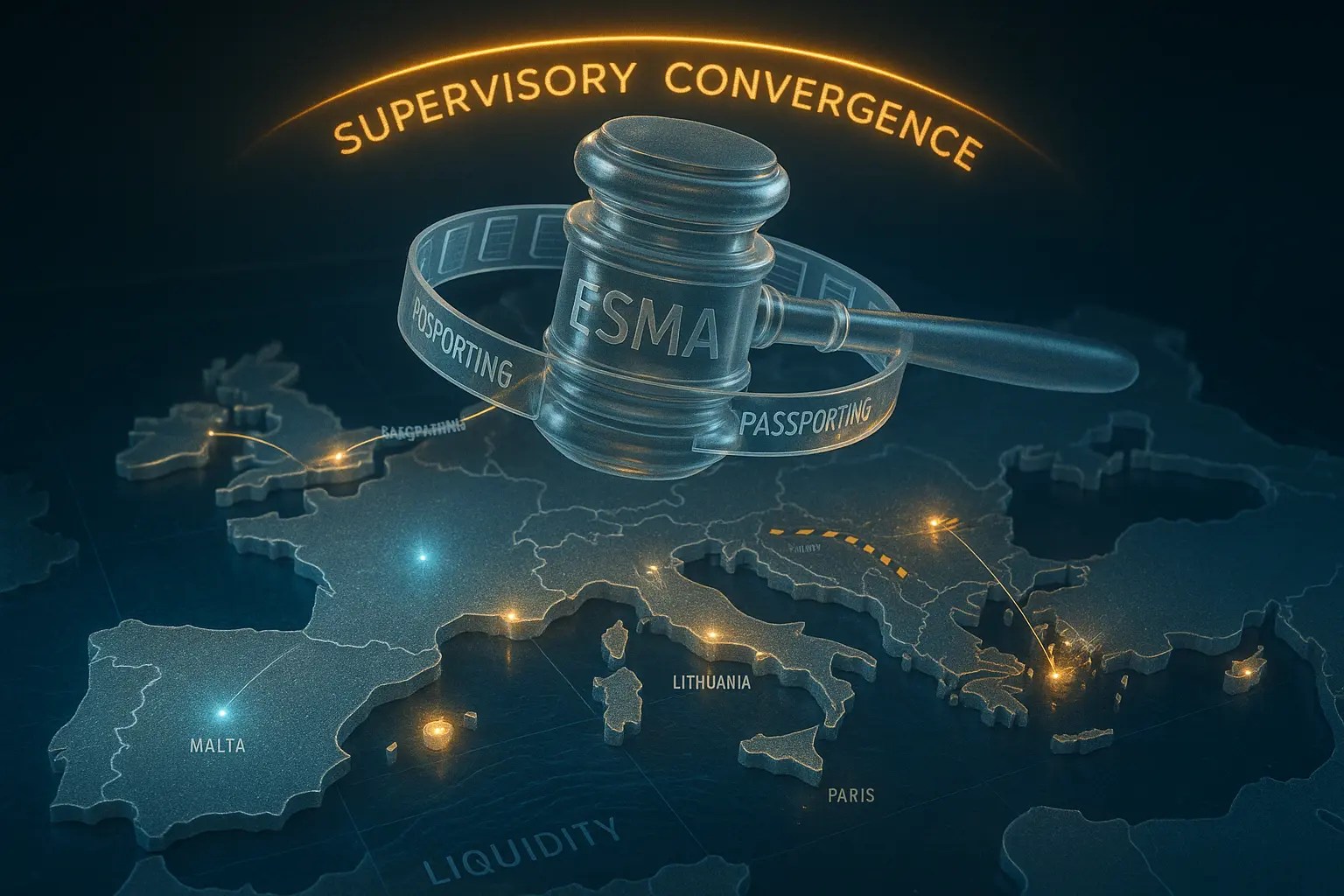
The European Securities and Markets Authority wants more power over crypto in the European Union. ESMA says the current system under the Markets in Crypto-Assets law, known as MiCA, is too fragmented. Today, national competent authorities in each country issue licences to crypto-asset service providers, or CASPs. That means 27 different supervisors apply the same rules in different ways. ESMA argues this slows oversight, raises costs, and weakens investor protection. The European Commission is now studying a plan to move more supervision of crypto from national regulators to ESMA to support a single market and the Capital Markets Union.
Verena Ross, the ESMA chair, said the goal is a more integrated and globally competitive EU financial landscape. She says centralized EU crypto supervision would support supervisory convergence and cut duplication. Under MiCA, a licence from one member state lets a company use cross-border licensing, also called passporting, to operate across the bloc. But some large markets dislike how passporting works. France has weighed limits on firms licensed in other EU countries that want to serve French users. Critics say such limits could break single-market principles. Experts note that blocking passporting under MiCA is technically possible but creates legal complexity and risk for consistent implementation.
Several smaller states moved first with MiCA licences. Lithuania approved Robinhood Europe. Malta authorized exchanges such as OKX and Crypto.com. Luxembourg granted licences to Bitstamp and Coinbase. ESMA has warned about inconsistent licensing standards and said authorization processes need tighter checks. In July, ESMA flagged parts of Malta’s approach and called for clearer rules. The agency also pushes for stronger AML/CTF controls for exchanges and wallets so supervision is even across borders and enforcement powers work in practice.
Supporters of an ESMA lead say national authorities must build the same expertise 27 times, which is inefficient. They argue that direct ESMA oversight of key parts of EU crypto regulation would speed decisions, align prudential and conduct supervision, and improve market harmonization. The European Crypto Initiative, a policy group led by Marina Markezic, says the problem stems from having many supervisors for one framework. She warns that uneven rules under MiCA could undermine harmonization and damage trust. Jerome Castille, head of compliance at CoinShares, says the toughest job now is to keep implementation consistent so CASPs know what to expect when they apply for authorization and when they use passporting rights.
MiCA took effect in phases starting in June 2024. It builds a unified framework for digital assets across all 27 members. The law sets clear requirements for CASPs on licensing, governance, conflict management, market abuse, and consumer disclosures. It also covers asset-referenced tokens and e-money tokens. For companies, the value of MiCA is the EU-wide licence. A firm authorized in one member state can market and serve clients in the rest of the EU without new approvals, as long as it follows common rules. For users, this aims to boost investor protection and reduce risks from uneven standards.
If the European Commission backs ESMA’s proposal, lawmakers would still need to agree on scope. One model would keep day-to-day checks with national competent authorities but give ESMA direct supervision of the largest or most cross-border CASPs. Another would let ESMA run joint inspections with national regulators and set binding technical standards. Either way, the aim is clear: reduce fragmented market supervision, raise the bar for authorization, and make EU crypto regulation predictable.
Market players now watch whether France and other big countries press for stricter local gates despite MiCA passporting. They also track how Malta, Lithuania, and Luxembourg adapt to tighter ESMA expectations. Exchanges like OKX, Crypto.com, Bitstamp, Coinbase, and brokers such as Robinhood Europe need to show strong AML/CTF programs, clear governance, and clean authorization records to keep their MiCA licence and their EU-wide reach. ESMA, set up after the 2008 crisis to harmonize financial rules, says it wants one rulebook and one standard of oversight for crypto across Europe.
