
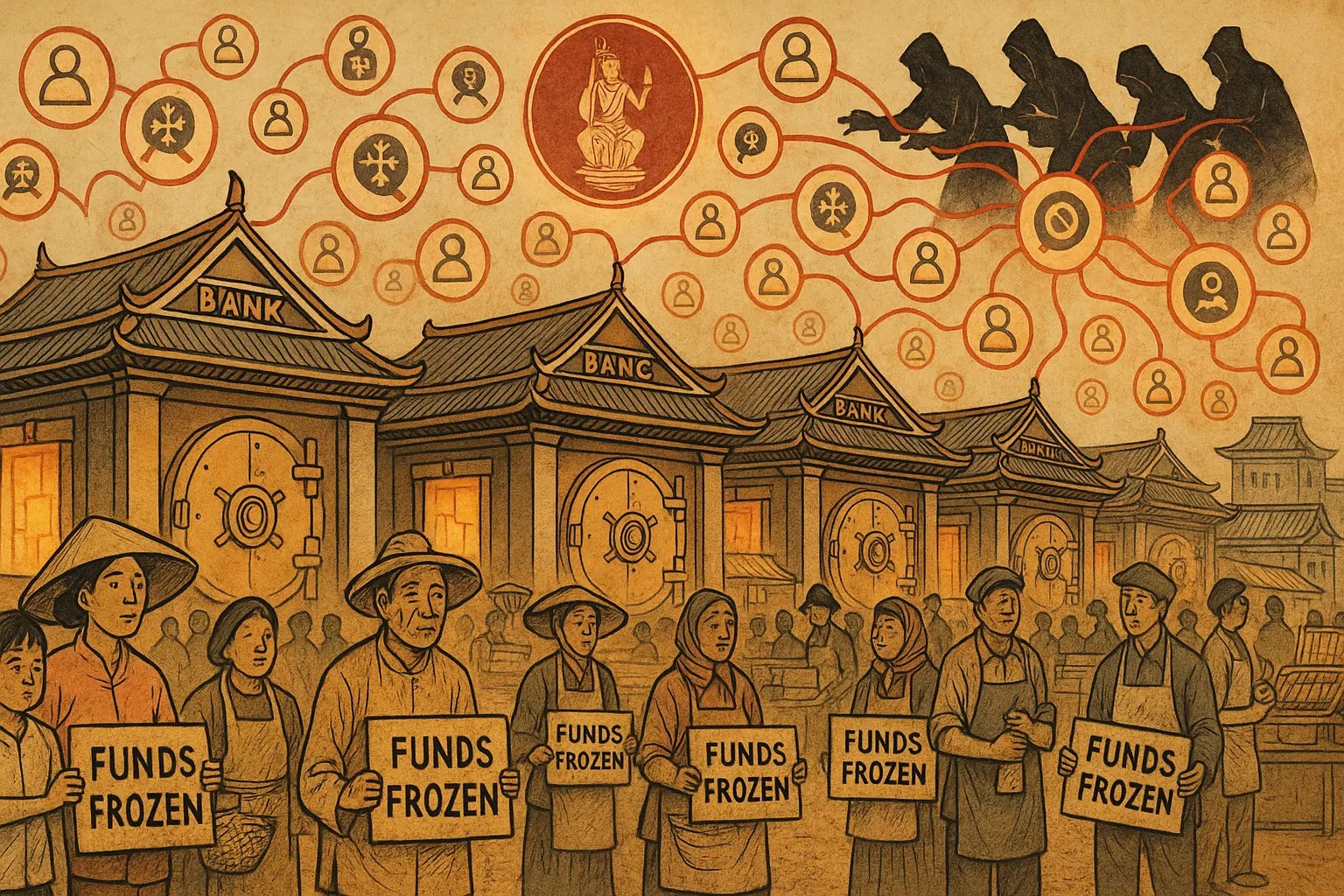
Thailand banks froze three million accounts in a nationwide crackdown on scams, and many ordinary people and small businesses found themselves unable to use their money. The Bank of Thailand, known as BoT, said the freeze was meant to stop fraud and protect citizens, but the move has left families, vendors, and shop owners struggling to pay bills and keep their businesses running. The Cyber Crime Investigation Bureau, or CCIB, reported that criminal groups were using mule accounts to move money and trick banks. A mule account is an account that scammers use to receive or send stolen money, sometimes owned by people who do not even know their account is being used for a crime.
The crackdown began in August when Thai banks worked with the Anti-Online Scam Operation Centre, called AOC, and the Anti-Money Laundering Office, or AMLO. Together they decided to put strict rules on transfers and daily limits. The goal was to stop fraud and keep scam money from spreading. The Digital Economy and Society Ministry, known as DES, also joined and set up a “war room” to handle hundreds of complaints every day. People called from across Thailand to say their money was locked. Police stations and call centers were flooded with reports from citizens and businesses whose accounts had been suspended.
Authorities said they targeted mule accounts, but many innocent people were caught up. Some sellers had money sent to them by scammers without knowing, and their accounts were frozen. In one case, scammers sent 100,000 baht to a child’s account and told the child to forward it. That account was flagged, and the family lost access even though they had nothing to do with fraud. Commissioner Pol Lt Gen Trairong Phiwpan said scammers were using new ways to launder money. Instead of only moving stolen funds, they bought goods from real sellers and resold them for cash. This made some businesses look suspicious even when they were not involved. He explained that some vendors may have joined knowingly to earn commissions, but most were deceived.
Daranee Saeju, assistant governor at the Bank of Thailand, said investigators were tracing financial routes to return stolen money. She explained that only accounts linked to mule accounts were supposed to be frozen. Still, many citizens felt punished for crimes they did not commit. The BoT admitted that a banking system error on September 1 also made things worse. The error prevented account balances from updating and caused even more confusion for customers trying to see how much money they had left.
The DES said that under Thai law only court-backed police orders can permanently freeze accounts. The freezes by banks, the AOC, or AMLO were temporary and meant to be reviewed quickly. Suspensions were checked by looking at money flow patterns, transaction routes, and if account activity matched normal behavior. Officials said once an account was cleared it could be unfrozen within minutes. Still, people complained that reviews took too long and the damage to trust in the banking system was growing.
The BoT promised faster reviews and fair compensation for victims. The CCIB also sent more officers to help police stations and call centers process cases faster. The aim was to protect people from fraud while also fixing mistakes that trapped innocent citizens. Authorities said they were working on new procedures to improve the system and prevent errors. They want to restore confidence in Thai banks, which many say was shaken by the mass freezes.
Critics argued that freezing millions of accounts was an extreme move. Sasha Hodder, founder of Hodder Law, said that citizens might prefer using crypto because banks can freeze funds but they “can’t freeze Bitcoin.” Her comment sparked debate about whether digital assets might be safer for people worried about losing access to their bank accounts. For now, Thailand continues to balance fraud prevention with the rights of citizens and businesses. The crackdown has shown how online scams and money laundering can cause harm not only to victims of fraud but also to people who had no part in it. Many hope that with new rules and faster reviews, Thailand banks will be able to stop scams without freezing the funds of innocent families and businesses again.
