
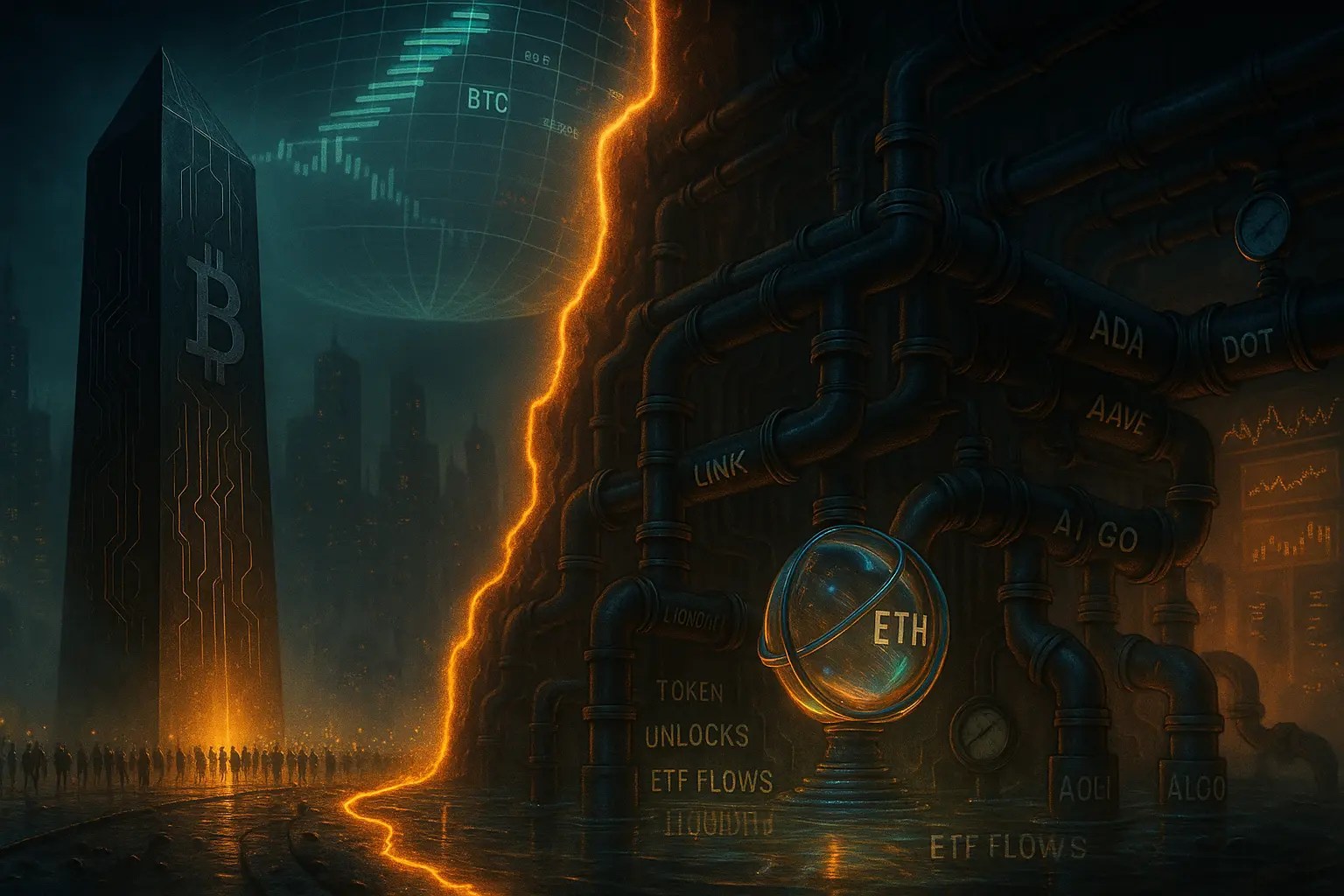
This cycle feels strange for anyone not holding Bitcoin. The old playbook says Bitcoin pumps first, Ethereum follows, and then altseason sends the rest flying. That pattern looks broken. Bitcoin dominance is strong. The ETH/BTC ratio is weak. Many “blue-chip” altcoins still sit far below their 2021 highs. ADA, LINK, DOT, AAVE, and ALGO built real tools and real networks. They shipped code. They have users and partners. Yet price action does not reward them. The market treats them like last-cycle bags.
Ethereum should be leading. It has the Ethereum ETF story, spot ETH ETF flows, EIP-1559 burn, and staking. Exchange reserves keep falling. People call this a supply shock. They point to CEX reserves and say the float is thin. They point to L2 adoption across Arbitrum, Optimism, and Base. They say fees are lower, UX is better, and activity is up. Still, ETH struggles to hold its old top. It is not in clear price discovery. The ETH/BTC ratio says money prefers Bitcoin.
Investors keep asking where the demand went. They ask where the big bid from institutions is. They ask why spot ETH ETF flows do not push the price. They ask why stablecoin supply grows but altcoins do not catch a sustained bid. Liquidity exists. It flows into Bitcoin first. It flows into equities and gold. The S&P 500 and Nasdaq trade near highs. Gold sits near records. Capital did not vanish. It is picky.
Retail is quiet. Many remember Terra, Celsius, and FTX. They remember broken promises. They chase AI stocks. They do not chase altcoin rotation. High rates and sticky inflation add pressure. Real yield in cash competes with staking yield. The risk premium needs a clear reason to move back into alts. Without that, the market keeps a narrow focus.
Tokenomics also matter. Token unlocks hit the tape month after month. VC overhang meets thin market depth. Liquidity concentration in a few names makes selloffs sharp. Order books for top-20 alts still look fragile. Each unlock asks the same question: who buys this supply? Without stronger spot demand, unlocks weigh on price. That is why “good tech” does not equal good returns. On-chain activity does not always feed back into the token.
Not every alt is the same. A few names can still run when a fresh story breaks. Solana shows that a strong L1 with clear narratives can attract both retail and funds. Even so, most “blue-chip” alts lag. DeFi TVL has not broken out in a way that changes the tape for AAVE and others. Chainlink has a strong oracle moat and large partners, yet its market cap and tokenomics raise debate. Cardano and Polkadot have active teams and communities, yet price sits far from old highs. Algorand holds a serious tech stack, yet the trend is down. The gap between product and price is wide.
For Ethereum, the L2 boom is a double edge. L2 adoption, rollup growth, and cheaper fees help the ecosystem. They can also reduce fee burn at the base layer. Lower fees mean less burn and a weaker price link in the near term. Staking locks a large share of ETH, which trims float but also lowers liquid supply on exchanges. The net effect is not simple. If flows do not arrive, even a low float does not guarantee a rally.
The core sign that the rotation is back would be a real change in flows and structure. Watch the ETH/BTC ratio. Watch BTC dominance. Watch spot volumes and market depth for top alts. Watch stablecoin supply and whether it rotates into spot, not just perps. Watch token unlock calendars and how price reacts after big cliffs. Watch spot ETH ETF flows and AUM growth over weeks, not days. If these lines move together, the market can open the door to altseason. If they do not, the door stays shut.
Macro does not explain everything. Equities at all-time highs tell us risk appetite is alive. The problem is not only the economy. The problem is demand for altcoins. Narrative trading now beats “good tech” and steady roadmaps. The game rewards those who front-run new stories. Most long-term bags from last cycle keep underperforming. Memecoins often outpace old “blue chips” because they match the current meta. That makes the space feel more like a race to catch the next theme and less like long-term investing.
This shift may mark a new kind of cycle. Money used to flow BTC → ETH → alts. Now it often stops at Bitcoin. Sometimes it reaches Ethereum. Sometimes it touches Solana or a small list of L1s. Liquidity fragmentation across thousands of tokens spreads attention thin. The market punishes slow stories and rewards speed. Survivorship bias grows. Strong projects from the last run may never see their old highs. The next bear will test them again. Many will not come back.
Two paths stand out. In one path, most altcoins bleed into the next downturn. Retail does not return. Liquidity shrinks. The old pattern, where alt buyers turn into long-term Bitcoin holders, fades. Even Bitcoin can feel a hit if the on-ramp narrows. In the other path, investors accept the lesson and buy Bitcoin first. They treat BTC as the core and take only small, fast bets on new narratives. A few alts win big. Most do not. This second path looks more likely than the broad altseason many still expect.
What would change this picture is simple. ETH needs a clean break into price discovery with sustained spot ETH ETF flows. The ETH/BTC ratio needs a trend up, not a bounce. Altcoin market depth must thicken. Stablecoin supply must rotate into spot demand across majors. Token unlocks must pass without heavy drawdowns. DeFi usage needs to show fee and revenue traction, not just wallets and transactions. If these steps happen together, the BTC → ETH → alts rotation can return. If not, the market stays narrow.
For now, treat crypto like it is. Treat Bitcoin as the base case. Use ETH/BTC as a rotation gauge. Track spot flows, not only narratives. Respect token unlocks and tokenomics. Screen projects for real value capture, not only activity. Avoid bagholding last-cycle names that rely on hope. If you want to play narratives, size small and move fast. If you want staying power, hold Bitcoin. The crowd that clings to old rules is stuck. The few who adapt to this new structure will do better when the next move finally comes.
